house of aurea

ghee vs butter.
they start as the same thing. the difference is time, heat, and what is left behind.
the smoke point.
butter burns at around 150°c. its milk solids turn bitter and the pan begins to smoke. ghee, with the water and milk solids slowly removed, holds steady past 250°c.
that extra room matters for searing, roasting, and the first thing out of the pan. it is the reason a cook reaches for ghee when butter would scorch.
how it is made.
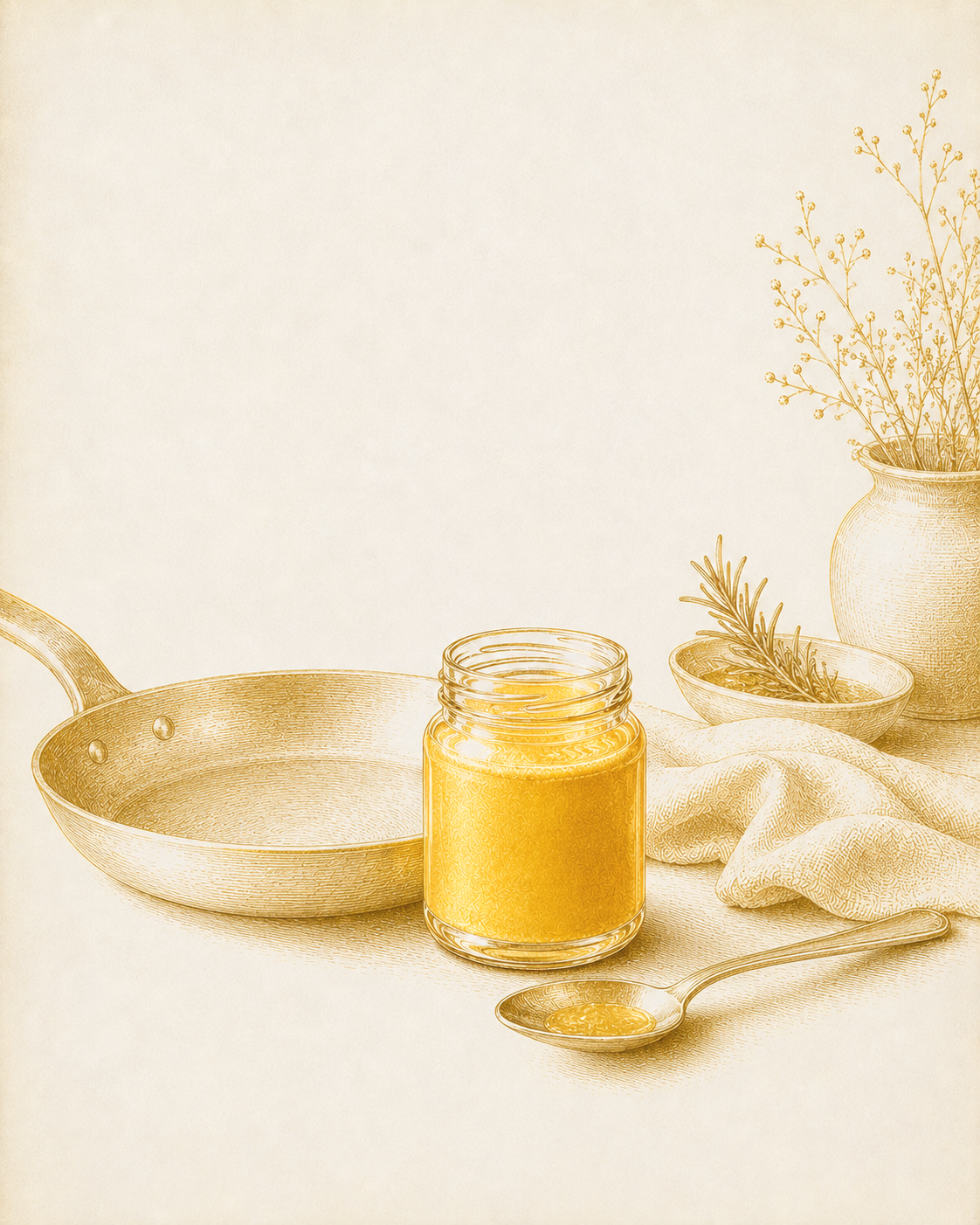
butter is churned cream. ghee is butter, cooked. the heat is kept low, the milk solids separate, and the water quietly evaporates. what remains is the fat, drawn clear and golden.
at aurea, we take this further. english butter from pasture-grazed cows is clarified slowly, without hurry, until the last of the milk solids turn and the whole of it warms into something deeper.
the flavour.
butter is fresh and milky. ghee is butter, concentrated. the slow heat brings out a nutty, faintly caramelised depth. the kitchen smells warm before anything reaches the table.
it is not a substitute for butter. it is a different fat, for moments when you want the heat and the richness both.
is ghee healthier than butter?
nutritionally, ghee and butter are close. both are mostly fat, with similar calories and saturated fat. the difference is what ghee no longer contains: the milk solids, and with them most of the lactose and casein.
for people who find butter hard to digest, ghee is often easier. it is not a health product. it is simply butter, made quieter.
when to use which.
butter
finishing a sauce, baking, spreading on bread, anywhere the fresh milkiness matters.
ghee
high heat, roasting, frying, the morning cup, or whenever you want the nutty, caramel depth to carry through.